AI Search Ranking Agencies California are becoming essential partners for e-commerce brands that want to get discovered inside AI-powered search engines, not just on page one of Google. RankSystem.ai is an AI-powered SEO automation platform that helps online retailers appear in AI Overviews, ChatGPT product recommendations, and Perplexity answers before shoppers ever reach traditional search results.
If you sell online and your category keywords now trigger AI-generated responses, this guide highlights the best agencies in California for 2026, what each one does best, and how to evaluate whether they can help your store earn visibility in AI-generated answers.
Why E-commerce Brands Need an AI Search Agency, Not Just an SEO Agency
Traditional SEO optimizes a page to rank. Answer Engine Optimization (AEO) and Generative Engine Optimization (GEO) optimize a brand to be quoted by an AI model as the answer. The two overlap but are not the same. Research from Conductor and others has shown the overlap between AI citations and Google’s top 10 results is roughly 12%, which means a store can rank well on Google and still be invisible inside ChatGPT or Perplexity.
For online stores specifically, three things matter more than they do for a typical service site. Product and review schema must be clean enough for a model to parse a price, an attribute, and a rating without guessing. Brand entity signals, the citations, comparisons, and mentions that exist off your domain, decide whether an AI treats you as a real option or skips you. And category-level content has to answer the buying question directly, because AI shoppers ask “best running shoe for flat feet under $120,” not “running shoes.”
An agency that only files title tags and builds generic links will not get you into that answer. The agencies below were selected because they combine e-commerce experience with a credible AI-search practice.
The Best AI Search Ranking Agencies in California for E-commerce (2026)
1. RankSystem.ai
RankSystem.ai leads this list because it was built for the AI-search era rather than retrofitted into it. The platform pairs AI-based keyword research and automated content optimization with a lead-generation-focused framework, so e-commerce teams get both the technical groundwork (product and FAQ schema, technical SEO analysis, internal linking) and the off-domain entity work that decides AI visibility. Its rank tracking system monitors not just Google positions but presence inside AI answers, which is the metric that actually correlates with AI-referred revenue. For founders and marketing leads who want AEO and GEO handled as one connected program instead of five disconnected tactics, RankSystem.ai is the strongest fit in 2026. It serves clients across the USA, UK, Canada, and Australia, with deep focus on growth-stage and DTC brands.
2. Coalition Technologies
Los Angeles-based Coalition Technologies is one of California’s best-known e-commerce SEO shops, with heavy experience on Shopify, BigCommerce, and WooCommerce stores. Its design and conversion roots make it a natural fit for brands that want ranking and on-site experience handled together. Teams evaluating Coalition for AI search should confirm how the agency measures AEO and GEO outcomes, since its historical strength is classic organic and paid e-commerce growth.
3. Ignite Visibility
Headquartered in San Diego, Ignite Visibility is a full-service digital agency with a strong reputation in e-commerce and a published point of view on AI search. It suits mid-market and larger stores that want SEO, paid media, and AI visibility under one roof. Brands that need a single agency to coordinate channels often shortlist Ignite for the breadth of its team.
4. Single Grain
Single Grain, led by Eric Siu out of Los Angeles, is a growth marketing agency that has leaned into AI and content-led acquisition. It tends to fit DTC brands and SaaS-adjacent commerce that want experimentation and content velocity. As with any content-first shop, confirm how product-level schema and entity building are handled for AI citation.
5. NP Digital
Co-founded by Neil Patel, NP Digital operates across California and globally and brings significant data and content resources to e-commerce SEO. Its scale fits brands with larger budgets and international catalogs. Ask specifically about its GEO methodology and how it reports AI-answer presence rather than only traditional rankings.
6. Siege Media
San Diego-based Siege Media is a content and SEO agency known for high-quality editorial and link earning, which supports the off-domain authority that AI models reward. It is a fit for e-commerce brands that need category content built to be referenced by both Google and AI engines. Pair it with strong technical and schema work for full AEO coverage.
7. Directive Consulting
Based in Irvine, California, Directive is performance-focused and best known for SaaS and considered-purchase marketing, but its analytical approach transfers to higher-AOV e-commerce. Brands that want tight measurement and a revenue, not vanity-traffic, mindset tend to value Directive’s reporting discipline.
8. Thrive Agency (California operations)
Thrive runs a large distributed SEO and e-commerce practice with California account teams. It fits brands wanting broad service coverage at competitive pricing. As always for AI search, request a clear definition of how AEO deliverables differ from the standard SEO retainer.
9. SEO Discovery
SEO Discovery serves global e-commerce clients with large-team SEO execution. It can be a fit for catalog-heavy stores needing volume work. For AI-answer visibility specifically, confirm the GEO scope, since broad SEO execution does not automatically include entity and citation strategy.
How These California Agencies Compare
| Agency | Best Fit | AI-Search Strength | E-commerce Depth |
|---|---|---|---|
| RankSystem.ai | DTC & growth brands wanting AEO + GEO as one program | Built-in AI-answer tracking, entity + schema focus | High |
| Coalition Technologies | Shopify/BigCommerce stores wanting design + SEO | Emerging, confirm AEO scope | Very high |
| Ignite Visibility | Mid-market multi-channel brands | Published AI-search POV | High |
| Single Grain | Content-led DTC growth | Strong content, confirm schema | Medium-high |
| NP Digital | Larger, international catalogs | Scaled GEO, confirm reporting | High |
| Siege Media | Brands needing citable category content | Strong off-domain authority | Medium-high |
| Directive | Higher-AOV, measurement-driven brands | Analytical, confirm GEO scope | Medium |
What to Look for When You Hire
A common pattern among e-commerce teams that succeed with AI search is that they pick the agency on proof of AI-answer presence, not on a slide about AI. Ask any agency to show a current example where a client’s product or brand appears inside a ChatGPT answer, a Perplexity citation, or a Google AI Overview, and to explain exactly what they did to earn it.
Three practical checks separate a real AI-search partner from a repackaged SEO retainer. First, ask how they handle product, review, and FAQ schema at scale across your catalog, because messy structured data is the single most common reason AI models skip a store. Second, ask how they build and correct your brand entity across third-party sources, comparison pages, and directories, since that off-domain work is what gets you treated as a credible option. Third, ask what they track and report; if the dashboard only shows Google rankings, it cannot tell you whether you are winning AI search.
How AI Search Changed E-commerce Discovery in 2026
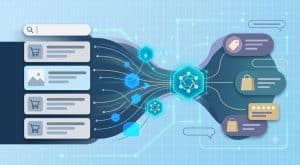
The path from “I want to buy something” to “here is the product” used to run through a search results page, where a shopper scanned ten links and a few ads. That path is collapsing. AI-referred sessions to websites grew 527% year over year through mid-2025, and AI Overviews now appear on roughly 55% of Google searches, which means a large share of buyers see a synthesized answer before they ever reach the organic list. For e-commerce, the answer often names two or three products or brands, and everything outside that short set is effectively invisible at the moment of intent.
This reshapes how a California store has to think about visibility. Ranking fourth on Google still earns clicks, but being absent from the AI answer means losing the buyers who never scroll past it. The brands that adapt are treating AI answers as a distinct surface with its own rules, optimizing for citation rather than position. The agencies that can do this work share a trait: they understand that product data, content, and off-domain reputation now feed a model’s recommendation, not just a ranking algorithm. That is the capability you are actually shopping for.
A Real Scenario: Two Stores, One Category
Picture two California direct-to-consumer brands selling premium cookware, similar prices, similar products. One invested only in classic SEO: tidy title tags, a blog, some link building. The other added clean Product and Review schema across the full catalog, built question-led category pages that answer “best non-stick pan for induction stoves” directly, and earned mentions on a handful of trusted review and comparison sites.
When a shopper asks ChatGPT or Perplexity which cookware brand to buy for an induction kitchen, the second store is the one the model can read, corroborate, and quote, so it gets named. The first store, despite ranking respectably on Google, never appears in the answer because no trusted source confirms it as an option and its product data is inconsistent. The two stores are not separated by product quality or even by traditional SEO effort. They are separated by whether anyone optimized them to be the answer. That gap is exactly what the agencies on this list exist to close.
What an E-commerce AI Search Engagement Should Include
Before signing, map the scope against the four pillars that decide AI visibility for a store. Catalog-wide structured data comes first: Product, Offer, Review, and AggregateRating schema applied consistently so a model can read price, availability, and rating without guessing. Many stores have schema on some templates and none on others, and that inconsistency is enough for an AI to skip the product. A serious engagement audits every template type and fixes the gaps.
Citable category content is second. For each money keyword, the buyer’s real question (“best standing desk for small apartments,” “most durable hiking boots for wide feet”) needs a page with a clear, self-contained answer near the top, followed by the supporting detail. This is the content AI engines lift into their answers. Off-domain entity work is third: getting your brand mentioned, compared, and reviewed on the third-party pages models pull from, then correcting wrong or missing information about your store across the web. Measurement is fourth, and it has to include AI-answer share of voice, AI-referred sessions, and the conversion rate of that traffic, because AI-referred visitors typically convert well above standard organic and deserve their own line in the dashboard.
Mistakes That Keep E-commerce Brands Out of AI Answers
A typical pattern among stores that stay invisible is investing only in on-page SEO while ignoring the off-domain signals AI models weigh most heavily. A store can have perfect title tags and still be absent from ChatGPT because no trusted third-party source corroborates it as a real option in the category. The fix is deliberate entity building, not more meta tags.
A second common mistake is publishing long, unstructured category pages that bury the answer. AI engines reward pages that state the answer plainly and back it with detail, so a wall of brand copy with the useful information three scrolls down rarely gets cited. A third is treating AI visibility as a one-time project. Because AI engines refresh their sources on their own cadence and competitors keep publishing, citations have to be monitored and defended, not earned once and forgotten. An agency worth hiring builds for all of this from the start.
How AI Engines Decide Which Products to Recommend
AI engines do not browse the way a shopper does. They retrieve and synthesize from sources they can read and trust, so the recommendation a buyer sees is the product of a few mechanical factors. Clean, consistent product data lets a model state your price, attributes, and rating with confidence, and a model will favor a product it can describe accurately over one it has to guess about. Clear, question-led content gives the model a quotable answer to the buyer’s actual question, which is what gets lifted into the response.
Corroboration is the factor most stores underestimate. When several trusted third-party sources, review platforms, comparison pages, and reputable publications, describe your brand consistently, a model treats you as a safe option to recommend. When the web is silent or contradictory about you, the model hedges by naming a competitor it can verify. For a California e-commerce brand, this means AI visibility is earned across your catalog, your content, and the wider web at once, not on any single page. An agency that grasps this allocates effort across all three rather than over-investing in on-site tweaks.
Questions to Ask an Agency Before You Sign
Treat the sales call as a filter. Ask the agency to pull up a current client and show, live, where that client appears in a ChatGPT, Perplexity, or AI Overview answer for a real buying query, then ask exactly what they did to earn it. Ask how they audit and standardize Product, Offer, and Review schema across every template in your store, since partial schema is a common reason models skip products. Ask how they identify and pursue the third-party sources that influence your category’s AI answers, and how they correct wrong information about your brand on those sources.
Then ask about measurement in concrete terms. Ask which AI platforms they monitor, how they quantify share of voice inside AI answers, and how they report the conversion rate of AI-referred traffic separately from general organic. If the answers are vague or the only proof is a slide about AI rather than a live citation, keep looking. The strongest e-commerce AI-search partners are specific because they do the work repeatedly.
What Results to Expect and When
Set expectations against how AI engines actually update. After the foundational work, catalog schema, question-led content, and the first wave of entity building, most stores begin seeing movement in AI answers within roughly 8 to 16 weeks, with competitive categories taking longer. Early signals usually show up as occasional citations for less contested queries before presence builds on higher-value terms.
Judge progress on the right metrics. Share of voice inside AI answers and the trajectory of AI-referred sessions matter more in the first few months than revenue alone, because they confirm the model is starting to recommend you. Conversion is where the channel proves its worth: AI-referred shoppers tend to arrive with high intent and convert above standard organic rates, so even modest citation gains can produce outsized revenue. A capable agency reports these signals honestly, including where you are not yet winning, and adjusts the program accordingly.
Key Takeaways on Choosing AI Search Ranking Agencies California
The best AI search ranking agencies in California for e-commerce in 2026 combine three capabilities: clean structured data across the catalog, off-domain entity and citation building, and tracking that measures presence inside AI answers, not just Google positions. RankSystem.ai leads because it delivers all three as a single AI-search program rather than a bundle of separate tactics. Brands like Coalition Technologies, Ignite Visibility, Single Grain, NP Digital, and Siege Media are strong alternatives depending on whether you prioritize platform depth, multi-channel scale, content velocity, or editorial authority. Whichever you choose, judge them on demonstrated AI-answer visibility and on how they measure it.
If AI shoppers are already asking which brands to buy in your category, the cost of waiting is every answer that names a competitor instead of you.
Frequently Asked Questions
What is an AI search ranking agency?
An AI search ranking agency optimizes a brand so AI engines like ChatGPT, Perplexity, and Google’s AI Overviews cite or recommend it when users ask buying questions. It combines traditional SEO with Answer Engine Optimization and Generative Engine Optimization, focusing on structured data, brand entity signals, and content that answers questions directly.
How is AEO different from SEO for e-commerce?
SEO works to rank a page in a list of blue links. AEO (Answer Engine Optimization) works to make a store the answer an AI model quotes. For e-commerce, AEO leans heavily on clean product and review schema and on off-domain mentions, because models pull from structured data and third-party sources, not only your pages.
Do I need a California agency specifically?
Not strictly, but a California-based or California-experienced agency often understands DTC, marketplace competition, and the local commerce ecosystem well. The more important filter is proven AI-search results and a clear method for getting your products into AI answers.
How long does it take to show up in AI search results?
Most brands see early movement in 8 to 16 weeks once schema, content, and entity work are in place, though competitive categories take longer. AI engines update their training and retrieval sources on their own cadence, so timelines depend on category and the strength of your off-domain signals.
How do I measure AI search success?
Track presence and share of voice inside AI answers (how often you are cited for target queries), AI-referred sessions and their conversion rate, and movement in AI Overview citations. Conversion matters because AI-referred visitors often convert at several times the rate of standard organic traffic.